
Brahma
Also known as: Brahma Pootra
The gentle giant of the chicken world: a towering, feather-legged breed with roosters up to 12 pounds, famous for a calm, docile nature that belies its size. Brahmas are quiet, kid-friendly, cold-hardy winter layers of about 150-200 brown eggs a year, but they mature slowly (often not laying until six to nine months), dislike heat, and need dry ground to keep their feathered feet clean.
Figures verified against 3 sources. Ranges reflect variation by strain and individual bird.
At a glance
- Eggs / year
- 150–200
- Egg size
- large
- Purpose
- dual-purpose
- Class
- Large fowl
- Hen weight
- 8–10 lb
- Rooster weight
- 10–12 lb
- Starts laying
- 24–40 weeks
- Lifespan
- 5–8 years
- Comb
- pea
- Noise
- quiet
- Origin
- United States (from Shanghai imports) (1850)
- Conservation
- Recovering
Egg color: Brown
Temperament & suitability
Appearance
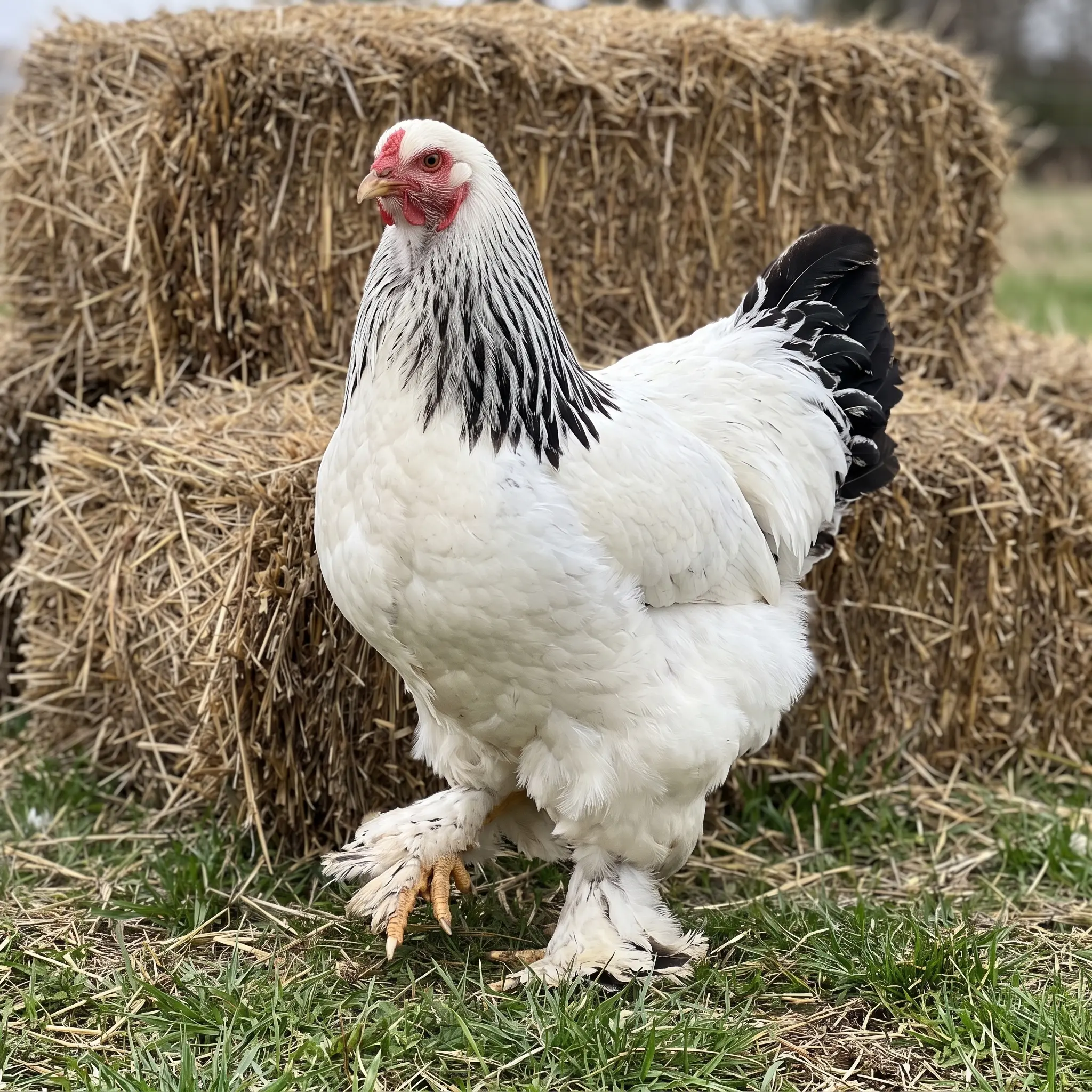
One of the largest chicken breeds, a towering, heavily feathered bird with feathered legs and feet. Light, dark, and buff varieties.
Varieties
The APA recognizes three large-fowl Brahma colors. The Light Brahma, white with black hackle and tail markings, is the most familiar. This page covers the Brahma breed generally.
Pros and cons
Pros
- Gentle giant, calm and easy to handle
- Excellent cold hardiness
- Lays through winter better than many breeds
Cons
- Slow to mature and start laying (up to ~9 months)
- Heat sensitive
- Feathered feet need dry, clean ground
Common questions
How big do Brahmas get?
Hens reach 8-10 lb and roosters 10-12 lb, among the largest of all breeds.
When do Brahmas start laying?
Late, often 24-40 weeks, as they mature slowly.
When will your Brahma start laying?
Just got chicks? Enter their hatch date and we’ll estimate the first-egg window for a Brahma, based on its point of lay of 24–40 weeks. Hens rarely read the calendar, so treat it as a range.
Sources
Verified 2026-07-06. Weights (hen ~10 lb, rooster ~12 lb), brown eggs and Asiatic class confirmed by Wikipedia and the Livestock Conservancy (up to ~200 eggs/yr, a good winter layer). Point of lay is late, about 24-40 weeks for this heavy breed. The Livestock Conservancy graduated the breed off its priority list in 2023.