
Leghorn
Also known as: White Leghorn, Livorno
The classic white-egg machine and the ancestor of most commercial layers: a lean, active Mediterranean breed that starts laying young and produces a prolific 250-320 white eggs a year. Leghorns are hardy, heat-tolerant, and superb foragers, but they are flighty, noisy, and not lap chickens, and their large combs are prone to frostbite in hard winters.
Figures verified against 3 sources. Ranges reflect variation by strain and individual bird.
At a glance
- Eggs / year
- 250–320
- Egg size
- large
- Purpose
- eggs
- Class
- Large fowl
- Hen weight
- 4.5–5.5 lb
- Rooster weight
- 6–7.5 lb
- Starts laying
- 16–18 weeks
- Lifespan
- 4–6 years
- Comb
- single
- Noise
- loud
- Origin
- Italy
- Conservation
- Recovering
Egg color: White
Temperament & suitability
Appearance
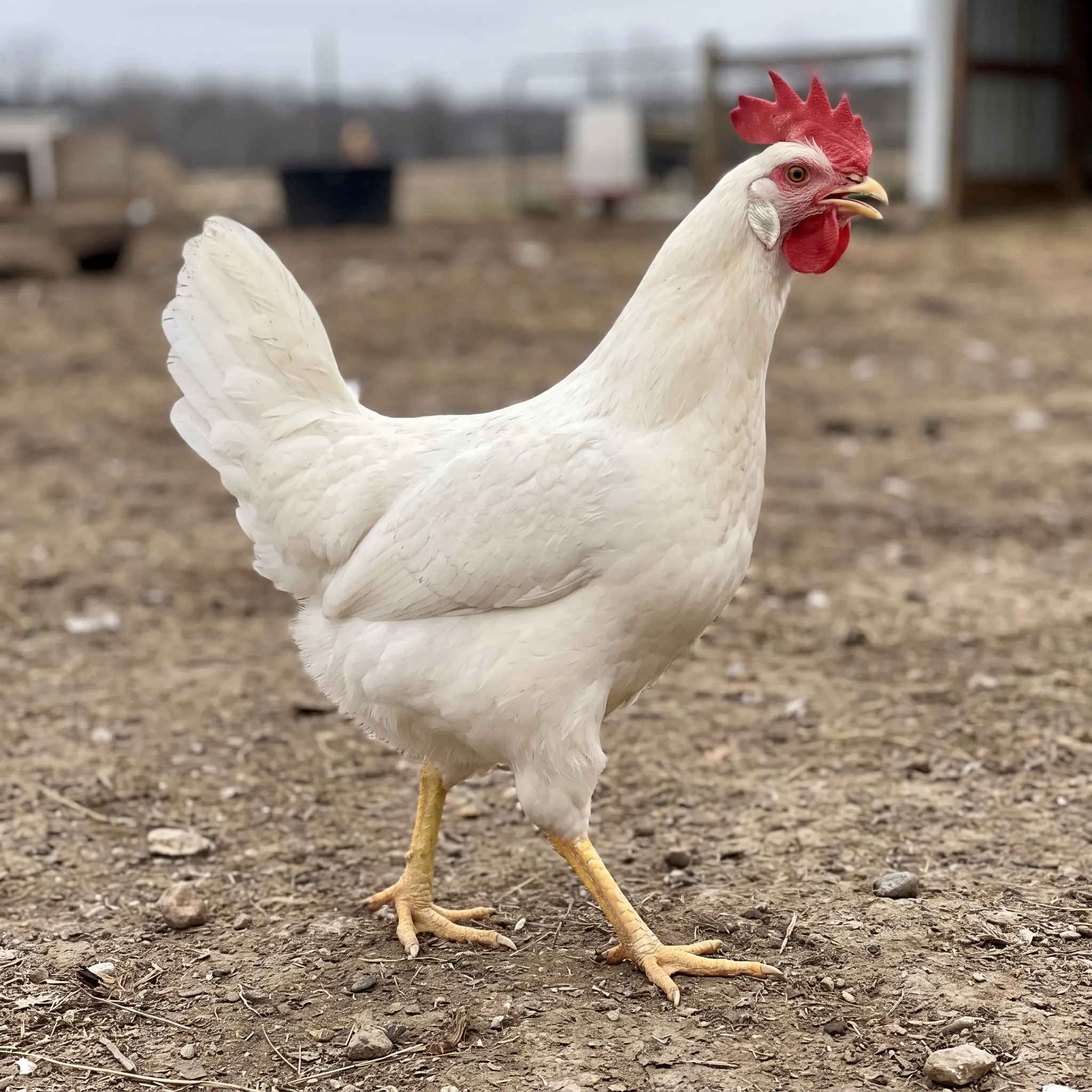
Trim, active bird with a large single comb. White Leghorn is the classic commercial white-egg layer; also brown and other colors.
Varieties
This page represents the Single Comb White Leghorn, the commercial layer. Most colors come in both single-comb and rose-comb forms, with the rose-comb set being a smaller subset.
Pros and cons
Pros
- Outstanding white-egg layer (250-320/yr)
- Very early to lay (~16-18 wk)
- Heat tolerant and efficient forager
Cons
- Flighty and not a lap chicken
- Noisy
- Large comb prone to frostbite in cold
Common questions
How many eggs do Leghorns lay?
Among the best, roughly 250-320 white eggs per year.
When do Leghorns start laying?
Early, often 16-18 weeks.
When will your Leghorn start laying?
Just got chicks? Enter their hatch date and we’ll estimate the first-egg window for a Leghorn, based on its point of lay of 16–18 weeks. Hens rarely read the calendar, so treat it as a range.
Sources
Verified 2026-07-06. White egg color and 'Recovering' conservation status confirmed by both sources. Weights reconciled across sources (Livestock Conservancy hen 4.5 lb / rooster 6 lb; Wikipedia up to 5.5 / 7.5 lb); the range brackets both. Eggs/yr: Livestock Conservancy gives 150-320 (non-industrial to top strains); 250-320 reflects productive standard-bred layers. Non-industrial strains are the conservation concern; commercial white layers derive from this breed. Point-of-lay (16-18 wks) reflects Leghorns' well-known early lay.