
Wyandotte
Also known as: Silver-Laced Wyandotte
A rugged, beautifully laced dual-purpose breed built for cold climates: dense-feathered, cold-hardy, and a steady layer of about 180-240 brown eggs a year right through winter. Wyandottes are friendly and easy for beginners, though they are confident birds that often rank high in the pecking order, and their thick feathering can hide parasites if you do not check.
Figures verified against 3 sources. Ranges reflect variation by strain and individual bird.
At a glance
- Eggs / year
- 180–240
- Egg size
- large
- Purpose
- dual-purpose
- Class
- Large fowl
- Hen weight
- 6–6.5 lb
- Rooster weight
- 8–8.5 lb
- Starts laying
- 18–24 weeks
- Lifespan
- 6–12 years
- Comb
- rose
- Noise
- moderate
- Origin
- United States (1883)
- Conservation
- APA recognized
Egg color: Brown
Temperament & suitability
Appearance
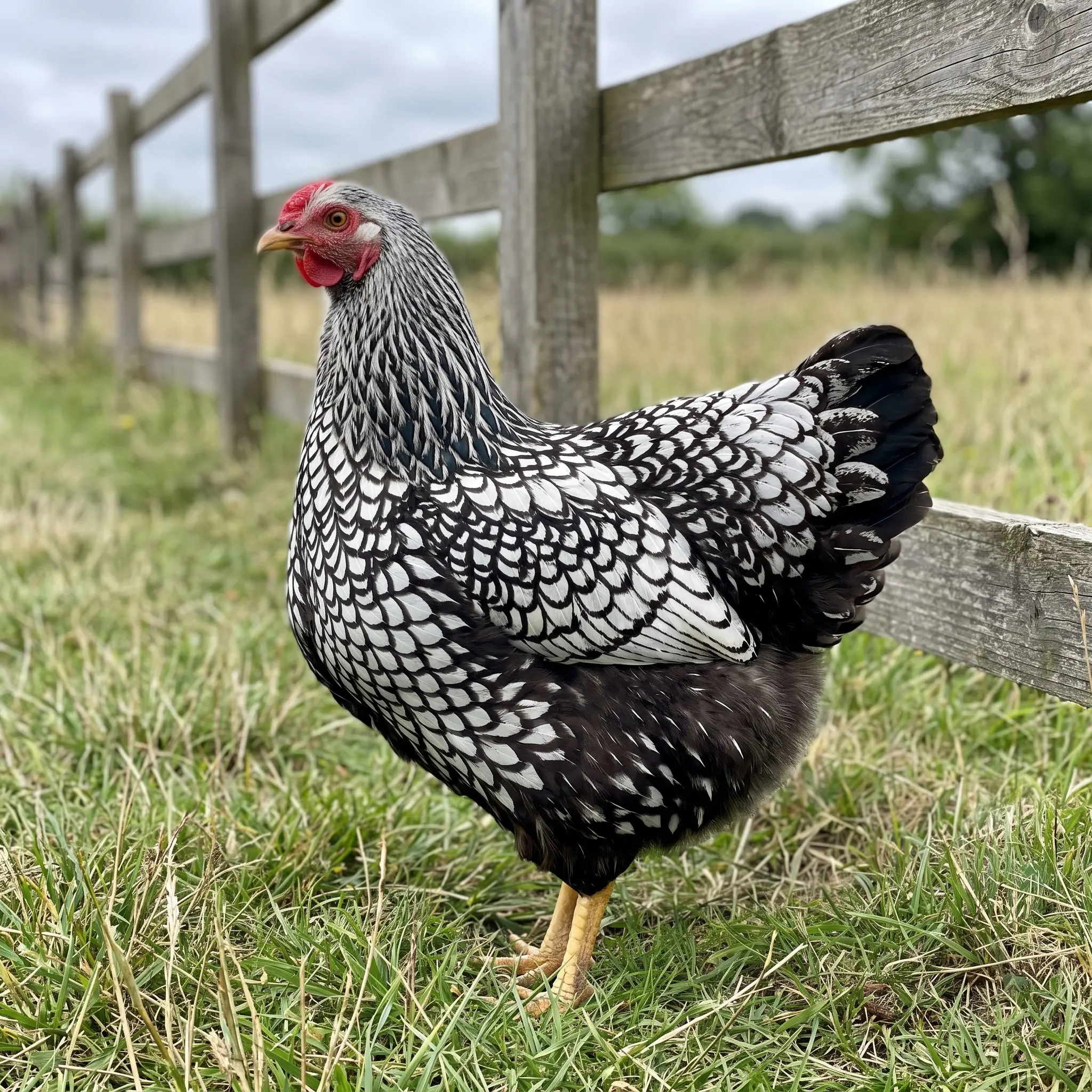
Rounded, full-bodied bird known for striking laced plumage (silver-laced, gold-laced, blue-laced red). Rose comb resists frostbite.
Varieties
This page represents the Silver Laced, the original Wyandotte and the first recognized in 1883. The APA lists nine large-fowl colors; UK and European standards add several more that are not APA-recognized.
Pros and cons
Pros
- Very cold hardy (rose comb resists frostbite)
- Reliable brown-egg layer
- Beautiful laced color patterns
Cons
- Can be assertive/high in the pecking order
- Dense feathering hides parasites
- Some lines go broody
Common questions
Are Wyandottes good layers?
Yes, about 180-240 large brown eggs a year, and they lay well through cold weather.
Are Wyandottes cold hardy?
Very. The rose comb and dense feathers make them a top cold-climate breed.
When will your Wyandotte start laying?
Just got chicks? Enter their hatch date and we’ll estimate the first-egg window for a Wyandotte, based on its point of lay of 18–24 weeks. Hens rarely read the calendar, so treat it as a range.
Similar breeds
Sources
Verified 2026-07-06. Weights (hen ~6.5 lb, rooster ~8.5 lb), brown eggs and American class confirmed by Wikipedia and the Livestock Conservancy, which graduated the breed off its priority list in 2016. Both sources call it a good layer of large brown eggs; the ~180-240/yr figure is a typical-strain estimate, not a cited number.